
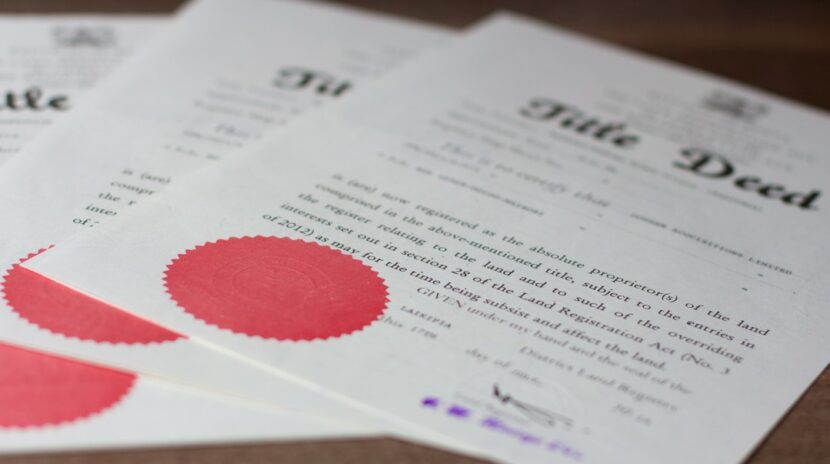
Title Deeds in Thailand. In Thailand, land is more than an asset; it is interwoven with history, agriculture, and national identity. The system governing its ownership is a complex hierarchy of documents, each representing a different degree of recognition, security, and legal standing from the state. For any investor, developer, or homeowner, understanding these title deeds—the “Chanote” and its predecessors—is not merely due diligence; it is the fundamental act of risk management. This article moves beyond basic definitions to explore the legal evolution, technical intricacies, and profound practical implications of Thailand’s land title system.
The Historical and Legal Foundation: From Possession to Absolute Title
Thailand’s modern land titling system was largely established under the Land Code of 1954. Prior to this, land ownership was often based on possession and tax receipts, leading to widespread disputes. The Code initiated a systematic, ongoing process of land surveying and adjudication to convert traditional claims into state-guaranteed titles. This process is not complete, resulting in a multi-tiered system where the type of deed dictates the very nature of your “ownership.”
The paramount principle is that all land ultimately belongs to the state; a title deed is evidence of the state granting the holder a “right of ownership” (สิทธิ์ครอบครอง) or “right of possession” (สิทธิ์ถือครอง), each with varying levels of enforceability against third parties.
The Hierarchy of Title Deeds: From Possessory Right to Indisputable Ownership
1. Sor Kor 1 (ส.ค.๑) – Notification of Possession:
-
Nature: This is not a deed of ownership, but a tax document—a notification of possession filed with the local Land Office. It was historically issued for agricultural land.
-
Rights Conferred: It grants a weak, non-transferable possessory right. It cannot be used as collateral for a mortgage, and any sale requires a cumbersome process of extinguishing the old Sor Kor 1 and issuing a new one to the buyer.
-
Risk Profile: Extremely High. It offers no guarantee against overlapping claims. Many properties in rural areas are still on Sor Kor 1, and “purchasing” one is essentially buying the occupant’s claim, not the land itself.
2. Nor Sor 3 (น.ส.๓) – Certificate of Utilization:
-
Nature: An intermediate document issued after a basic survey. It confirms the holder’s right to utilize the land.
-
Rights Conferred: Stronger than Sor Kor 1, it is transferable and mortgageable. However, it lacks the precise geospatial definition of a full title.
-
Critical Detail: It is subject to a “30-day public notice period” upon any transaction. During this period, a third party can formally contest the transaction by claiming a prior right to the land. This injects significant uncertainty into the purchase process.
3. Nor Sor 3 Gor (น.ส.๓ ก) – Confirmed Certificate of Utilization:
-
Nature: An upgraded Nor Sor 3 that has undergone a more precise aerial survey. The parcel has defined boundaries, and the public notice period is waived for transactions.
-
Rights Conferred: Functionally similar to a Chanote in many transactions (transfer, mortgage), it is highly secure. It can be considered a quasi-Chanote and is often the document held by land awaiting the final step of full Chanote issuance.
4. Chanote (โฉนด) – Nor Sor 4 (น.ส.๔): The Title Deed:
-
Nature: The gold standard and only document representing absolute, state-guaranteed freehold ownership. It is issued after a cadastral survey conducted by the Royal Thai Survey Department, using precise GPS coordinates to mark each boundary point (หลักเขต) with a numbered concrete marker.
-
Rights Conferred: Indisputable ownership. The holder’s rights are guaranteed against all other claims. It is freely transferable, mortgageable, and can be subdivided (subject to local regulations). The reverse of the Chanote contains the history of all registered transactions, mortgages, servitudes, and leases.
Special Categories:
-
Nor Sor 2 (น.ส.๒): A deed for land allocated by the state for specific purposes (e.g., residential, industrial).
-
Por Bor Tor 5 (ป.บ.ท.๕): A tax receipt for buildings and structures separate from the land they sit on. Crucial for proving ownership of a house on leased land.
The Verification Process: Due Diligence as a Forensic Exercise
Checking a title deed in Thailand requires a multi-step forensic investigation:
-
Physical Inspection at the Land Office: An official search at the local Provincial Land Office (สำนักงานที่ดิน) is non-negotiable. This reveals the current registered owner, any encumbrances (mortgages, liens, leases, or legal cautions known as “ภาระจำยอม”), and the deed’s history.
-
On-Site Due Diligence: For Chanote, verifying the existence and numbering of the boundary markers is essential. For Nor Sor 3 types, a physical inspection of fences, natural boundaries, and neighbor agreements is critical to identify potential boundary disputes.
-
Seller Verification: Confirming the identity of the seller against the Land Office records and ensuring they have the legal capacity to sell (e.g., for jointly-owned land, all owners must consent; for estate land, probate must be complete).
-
Zoning and Planning Laws: The title deed confirms ownership, not the right to build. Separate checks with the Local Tessaban (Municipality) or Or Bor Tor are required for building permits, land use classifications, and road access rights.
The Upgrade Path and Subdivision Regulations
Land can be upgraded through the “Nor Sor” process, typically moving from Sor Kor 1 → Nor Sor 3 → Nor Sor 3 Gor → Chanote. This requires application, survey, public posting, and the resolution of any objections. It is a bureaucratic process that can take years.
Subdividing a Chanote is strictly regulated by Ministerial Regulations. Key factors include the minimum plot size (which varies by zone—agricultural, residential, commercial), frontage access to a public road, and land use planning laws. Unauthorized subdivision can result in the new parcels being unregistered and therefore unmarketable.
The Foreign Ownership Conundrum and Title Implications
Thailand’s Land Code prohibits foreigners from owning land freehold, with limited exceptions. This prohibition directly interacts with title deeds:
-
Condominium Freehold: Foreigners can own up to 49% of the total unit area in a condominium building freehold. This ownership is registered on a “Condominium Title Deed” (โฉนดคอนโดมิเนียม), a specialized Chanote for strata-titled units.
-
Leasehold Structures: Foreigners commonly secure long-term leases (up to 30 years, renewable) registered on the Chanote’s reverse side. The strength of this leasehold interest is thus directly dependent on the underlying title’s strength.
-
Thai Company Route: While a Thai limited company can own land, if it is deemed a “nominee” structure for a foreigner, it is illegal. The authorities scrutinize the source of funds and shareholder composition.
Conclusion: Title as the First and Final Question
In Thailand, the type of title deed is the primary determinant of a property’s value, financeability, and security. A Chanote represents the culmination of the state’s adjudication process, offering a clear, defensible map of ownership. The lesser deeds represent stages in this journey, carrying commensurately higher risks. For anyone engaging with Thai real estate, the first question must always be: “What title deed does this land hold?” The answer dictates every subsequent step—from valuation and negotiation to financing and long-term security. In a nation where land is king, the title deed is the constitution of your kingdom, and understanding its every clause is the foundation of prudent investment.