
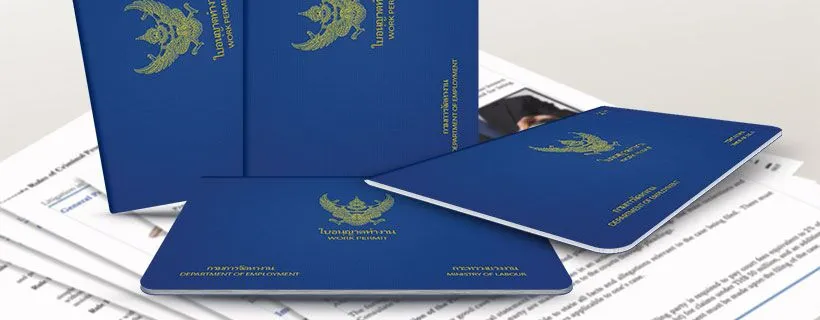
A Thai work permit is a legal authorization issued by the Thai government allowing a foreign national to work lawfully in Thailand. Any foreigner who performs employment-related activities in Thailand—whether as an employee, company director, consultant, or technical specialist—may be required to obtain a work permit. Thailand enforces strict labor and immigration compliance, and violations can lead to serious consequences including fines, imprisonment, deportation, and blacklisting.
One of the most common misunderstandings among foreigners is assuming that a visa grants the right to work. In Thailand, a visa and a work permit are legally separate. A visa permits entry and residence, while a work permit permits employment activity. Even foreigners who hold long-term visas, such as marriage visas or retirement visas, may be working illegally if they perform work without the correct permit.
Thai work permits are not general employment licenses. They are tied to specific conditions, including the employer’s name, job position, and approved work location. If a foreigner changes employers, relocates to a new branch, or takes on duties outside the scope of the permit, the work permit may become invalid or require amendment.
This article provides a detailed explanation of Thai work permits, including the legal definition of work, eligibility requirements, company sponsorship rules, application steps, renewal procedures, amendments, BOI work permit benefits, and common mistakes that lead to legal enforcement.
Legal Framework for Thai Work Permits
Work permits in Thailand are governed mainly by the Alien Employment Act, which regulates:
- which foreigners may work in Thailand
- occupations restricted to Thai nationals
- work permit issuance and renewal procedures
- employer obligations and reporting requirements
- penalties for illegal work
The work permit authority is the Department of Employment Thailand under the Ministry of Labour. Immigration permission is managed separately by the Thai Immigration Bureau, and work permit eligibility is closely tied to immigration status.
What Is a Thai Work Permit?
A Thai work permit is an official legal document allowing a foreign national to work under specific conditions. It typically includes:
- foreign worker’s name and passport details
- employer company details
- approved job title
- approved job description
- approved work location
- permit validity period
A foreign employee must perform work only according to these details. If a foreigner works at a different location or performs unauthorized tasks, authorities may treat it as illegal work even if the permit is still active.
What Is Considered “Work” in Thailand?
Thai law defines “work” broadly. It includes physical or intellectual activity that benefits a business or employer, regardless of whether payment is received.
Examples of work requiring a permit may include:
- managing a business or supervising staff
- negotiating contracts or dealing with clients
- marketing or sales activity
- teaching, coaching, or training
- engineering or technical supervision
- performing administrative or office duties
- consulting for a Thai company
- signing documents on behalf of a company
Even volunteer work may require authorization if it is structured and benefits an organization.
This broad definition is why foreigners should avoid assuming they can “help” in a Thai business without a work permit.
Work Permit vs. Visa: Understanding the Difference
A work permit is not a visa.
- A visa allows entry and lawful stay in Thailand.
- A work permit allows lawful work in Thailand.
The most common visa type linked to work permits is the Non-Immigrant B Visa (Business Visa). After obtaining the work permit, the foreigner typically applies for a one-year extension of stay based on employment.
Tourist visas, visa exemptions, education visas, and retirement visas do not automatically permit work.
Employer Sponsorship Requirements
A Thai work permit is normally employer-sponsored. The sponsoring company must meet government standards proving that it is a legitimate operating business.
1. Registered Capital Requirements
A commonly applied standard is:
- THB 2 million registered capital per foreign employee
This requirement may differ depending on the industry, BOI privileges, or special exemptions.
2. Thai Employee Ratio Requirements
A standard requirement is:
- 4 Thai employees per 1 foreign employee
This ratio is usually proven through Social Security contribution records.
3. Corporate Compliance Requirements
Authorities may request supporting documents such as:
- company affidavit and registration certificate
- shareholder list
- VAT registration (if applicable)
- corporate tax filings and audited financial statements
- withholding tax records
- Social Security payment evidence
- office lease agreement
- photographs of the office premises
- company location map
If the company is newly formed or has no real business operations, the application may be rejected.
Foreign Employee Qualification Requirements
Thai authorities assess whether the foreign applicant is qualified for the job position.
Typical requirements include:
- passport and valid visa pages
- educational degree certificates
- professional licenses (if required)
- resume/CV
- reference letters showing experience
- signed employment contract
- medical certificate issued in Thailand
- passport photographs
Some job categories require specific qualifications. For example, teaching roles may require degrees and relevant licensing depending on school type.
Foreign documents often require certified Thai translation and, in some cases, legalization.
Restricted Occupations for Foreigners
Thailand reserves certain occupations exclusively for Thai nationals. Work permits cannot be issued for restricted jobs.
Common restricted occupations include:
- manual labor
- street vending
- tour guiding
- traditional Thai massage
- beauty and hairdressing services
- driving certain vehicles
- agricultural work
Employers and foreigners must ensure the job position is eligible for foreign employment.
Work Permit Application Process
Step 1: Prepare Required Documents
The company prepares corporate documents while the foreigner prepares personal documents. Documentation is often extensive, and incomplete submissions are a common cause of delays.
Step 2: Submission to Department of Employment
The application is filed with the Department of Employment in the province where the company is registered.
The Department may request:
- additional documents
- clarification of job duties
- explanation of why a foreigner is required for the role
Step 3: Work Permit Approval and Issuance
If approved, the work permit is issued. The foreign employee must ensure the work permit details are correct.
Thailand has increasingly introduced digital work permits, but compliance expectations remain unchanged.
Renewal of Thai Work Permits
Work permits are commonly issued for up to one year and must be renewed before expiry.
Renewal requires proof that:
- employment continues
- the company remains tax compliant
- Social Security requirements are maintained
- registered capital requirements remain satisfied
- the foreigner continues to hold a valid visa and extension
Failure to renew on time may result in illegal employment status.
Work Permit Amendments
Work permit amendments are required if changes occur involving:
- work location
- job title
- job description
- employer name or registration details
- branch office assignment
A foreigner who works at a different location than the permit states may be considered in violation even if they are employed by the same company.
Termination and Work Permit Cancellation
If employment ends, the employer must cancel the work permit. The foreigner must also address immigration status, since employment-based visa extensions may become invalid after termination.
Common options include:
- transferring to a new employer
- changing visa category
- leaving Thailand before permitted stay expires
Improper cancellation can cause complications in future applications.
BOI Work Permit Benefits
Companies promoted by the Thailand Board of Investment (BOI) often receive advantages such as:
- faster processing
- simplified documentation
- flexible foreign employee quotas
- assistance through One Stop Service Centers
BOI promotion is common for foreign-owned companies in manufacturing, technology, and international service industries.
Penalties for Illegal Work in Thailand
Penalties for Foreign Workers
Foreigners working without proper authorization may face:
- fines
- imprisonment
- deportation
- blacklist bans preventing re-entry
Penalties for Employers
Employers hiring foreigners illegally may face:
- significant fines per worker
- criminal liability
- possible suspension of business operations
Thailand regularly conducts inspections, especially in tourism and hospitality sectors.
Conclusion
A Thai work permit is an essential legal requirement for foreigners working in Thailand and is strictly regulated under the Alien Employment Act. It is separate from immigration status and must be obtained even if the foreigner holds a valid long-term visa. Work permits are issued under specific conditions, including employer identity, job duties, and work location. Employers must meet registered capital and Thai employee ratio requirements, and foreign applicants must provide qualification evidence. Renewals and amendments must be handled properly to maintain legal status.
Because penalties for illegal work can include deportation and blacklisting, both foreign employees and Thai employers should treat work permit compliance as a critical legal obligation. Proper planning, correct documentation, and professional legal guidance are often necessary to secure and maintain lawful work authorization in Thailand.